Disintermediation
06 May 2026
What is it?
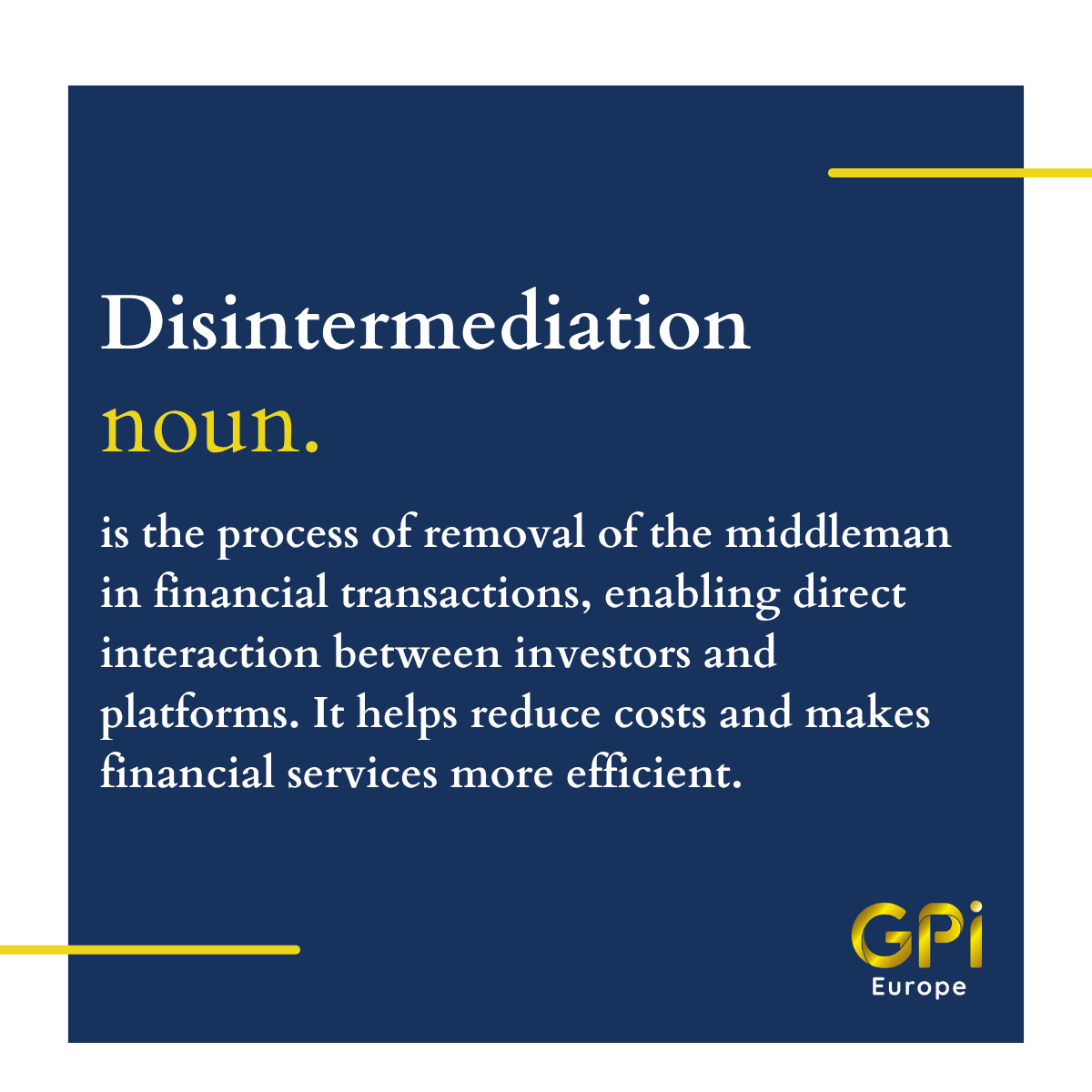
Disintermediation is the process of “removing the middleman”. Traditionally, financial transactions such as saving, investing, or borrowing are carried out through intermediaries like banks. Disintermediation occurs when these intermediaries are bypassed, allowing individuals or businesses to interact directly through digital platforms.
Why it happens
- Lower costs: eliminating intermediaries can reduce administrative and service fees.
- Potentially higher returns: investors may achieve better returns by lending or investing directly through alternative platforms.
- Technological advancement: digital platforms and fintech solutions make direct financial interaction easier and more accessible.
Examples
- Investing: buying shares directly through online trading platforms without a traditional broker.
- Crowdfunding: raising capital directly from a large number of individuals via online platforms.
- Peer-to-peer lending: lending money directly to individuals or small businesses in exchange for interest.
The risk
While disintermediation offers efficiency and cost benefits, it also increases risk exposure. Without traditional financial intermediaries, investors are responsible for conducting their own due diligence, and there is limited protection in the event of default.